Why your stomach is doing The Most: PCOS bloating, decoded
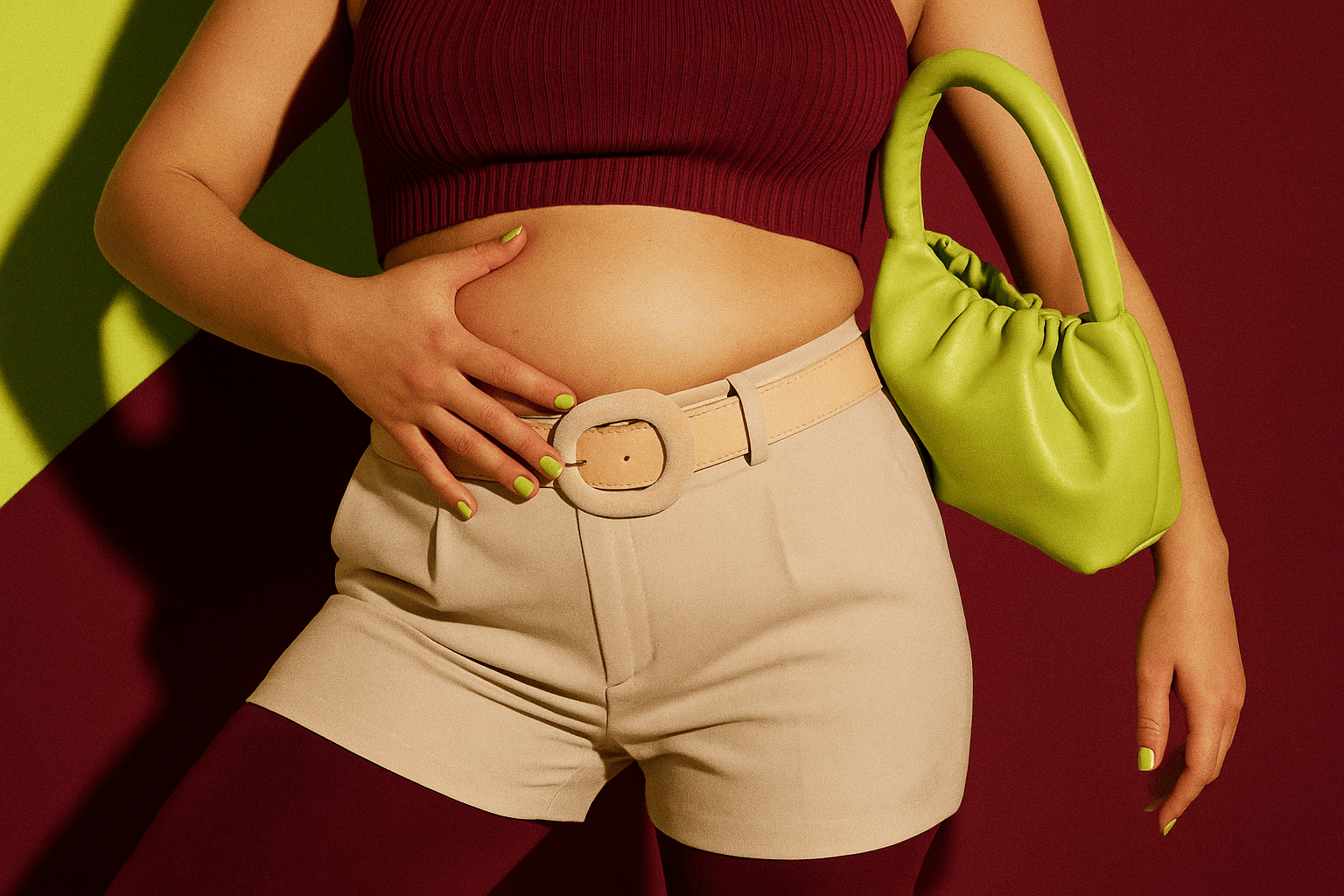
Bloating is one of the most common PCOS symptoms — and one of the least talked about in the doctor's office. You eat, your abdomen swells visibly within an hour, sometimes by a couple of inches, and there's no obvious pattern. You feel like a balloon animal nobody asked for.
Good news: the pattern is almost always there. It just takes the right tracking to see it. Across the research and across what every food-tracking app keeps surfacing, PCOS bloating is rarely random. It usually comes down to three or four specific triggers, per person.
PCOS gut situation is uniquely cursed: subtle gut dysbiosis, lower microbiome diversity, chronic low-grade inflammation (JCEM). All three make your gut more reactive than the average person's. So the foods that bother you aren't necessarily the ones that bother everyone else. Welcome to your specific brand of chaos.
Why PCOS makes the bloat worse
Three mechanisms stack up:
- Microbiome shifts. Lower microbial diversity in PCOS women, full stop, across studies. A less diverse gut handles fermentable foods (FODMAPs, fiber jumps, sugar alcohols) less gracefully.
- Chronic inflammation. PCOS comes with elevated inflammatory markers like CRP. Inflammation increases gut permeability, which makes the gut more reactive to foods that wouldn't bother someone else.
- Insulin spikes. A meal that spikes glucose and insulin slows gut motility AND pulls fluid into the digestive tract. Both produce a visible swell. Two-for-one, but in the worst way.
Translation: the same plate of pasta hits a PCOS body different. That's not in your head. That's biology.
The usual suspects
Across user data and clinical observation, PCOS bloating most often correlates with one or more of these:
- Dairy, especially milk and aged cheese. Lactose intolerance is more common in PCOS than in age-matched controls (World Journal of Gastroenterology).
- Refined wheat — bread, pasta, baked goods. Fast carbs plus gluten reactivity in some women is a classic PCOS combo.
- High-FODMAP foods like onion, garlic, certain stone fruits, some legumes. Most women don't need a full low-FODMAP diet — you just need to find your one or two.
- Artificial sweeteners like sorbitol, mannitol, sucralose, erythritol. Diet sodas and protein bars are the stealth offenders. Read the label.
- Carbonated drinks, including sparkling water for some. Sorry to your LaCroix habit.
- Eating too fast or too late. Mechanical bloat from swallowed air and slow gastric emptying after 8pm.
You almost certainly don't react to all six. The whole point of tracking is finding which two or three are yours.
Your personal trigger map
The fastest way to find your triggers is temporal correlation. Track what you ate, track when you bloated, and look for repeats over two to four weeks. The trick is the specificity — not "dinner makes me bloat" but "dinners with cheese on top of pasta produce a 60-minute bloat 80% of the time."
That's literally the use case Balance App was built for. Log meals by voice, photo, or text. Log bloat episodes when they happen. Balance does the correlation math and surfaces your patterns. Most women find their primary trigger inside a month.
A starting protocol if you want to do this yourself
Want to be your own data scientist? Here's the rigorous version:
- Log every meal for 14 days. No diet changes. The point is to capture your baseline.
- Log bloat episodes when they happen. Time, severity 1 to 10, what you ate in the prior 90 minutes.
- Find the top three foods that show up on bloat days. Not "always there" — "more often than baseline."
- Cut those three foods for 14 days. Watch what happens.
- Reintroduce one at a time, three days each. Keep tracking. The reintroduction stage is what makes this rigorous and not just elimination theater.
Six weeks in, most women have an accurate trigger list and a clear plan: keep, space out, drop. Your call.
What does NOT work
The three things most often suggested first that almost never solve PCOS bloating on their own:
- Generic "anti-bloat" supplements. You're guessing without knowing the trigger. Pass.
- Hard low-carb diets. Often clears bloating because it removes everything fermentable, but it's not sustainable and it doesn't actually teach you what your triggers are. You learn nothing. You just suffer differently.
- Random shelf probiotics. Specific strains have decent evidence for specific issues, but a mixed-strain capsule from the drugstore rarely moves the needle.
The shortcut everyone wants doesn't exist. The longer route — track, eliminate, reintroduce — almost always works in six weeks. That's the actual cheat code.
When the doctor's chair is the move
Severe or persistent bloating, especially paired with weight loss, blood in stool, or a family history of celiac, IBD, or ovarian cancer — that's beyond a food log. Ask your PCP about celiac screening, an H. pylori test, and (if symptoms fit) an ultrasound to rule out other causes. PCOS is a diagnosis of inclusion plus exclusion — bloating with red flags should get worked up properly.
Track first, then act
The sooner you start tracking, the sooner the patterns surface. If you haven't started, Balance App is the easiest entry point: log meals in seconds, log bloat when it happens, let the app correlate.
Wondering whether what you've got is even PCOS? The two-minute PCOS quiz walks the same Rotterdam-criteria signals a clinician would and sends you a personal read-out.
More PCOS truth bombs you'll want next.

Your period ghosted you again. Here's the actual reason (and it's fixable).
PCOS irregular periods come from one root cause, and it's not 'stress'. Here's what's happening biologically — and what actually restores your cycle.
A week of PCOS meals that won't ruin your life or your blood sugar
A real 7-day PCOS meal plan — plate-based, not calorie-counted, anchored in the three things that actually move the needle.

PCOS belly fat doesn't care about your calorie deficit. Here's what it does care about.
PCOS belly fat isn't a calorie problem — it's a hormone problem. Here's what the research says actually moves it (and what's been wasting your time).